Schonhaus vs Siemens Washing Machines
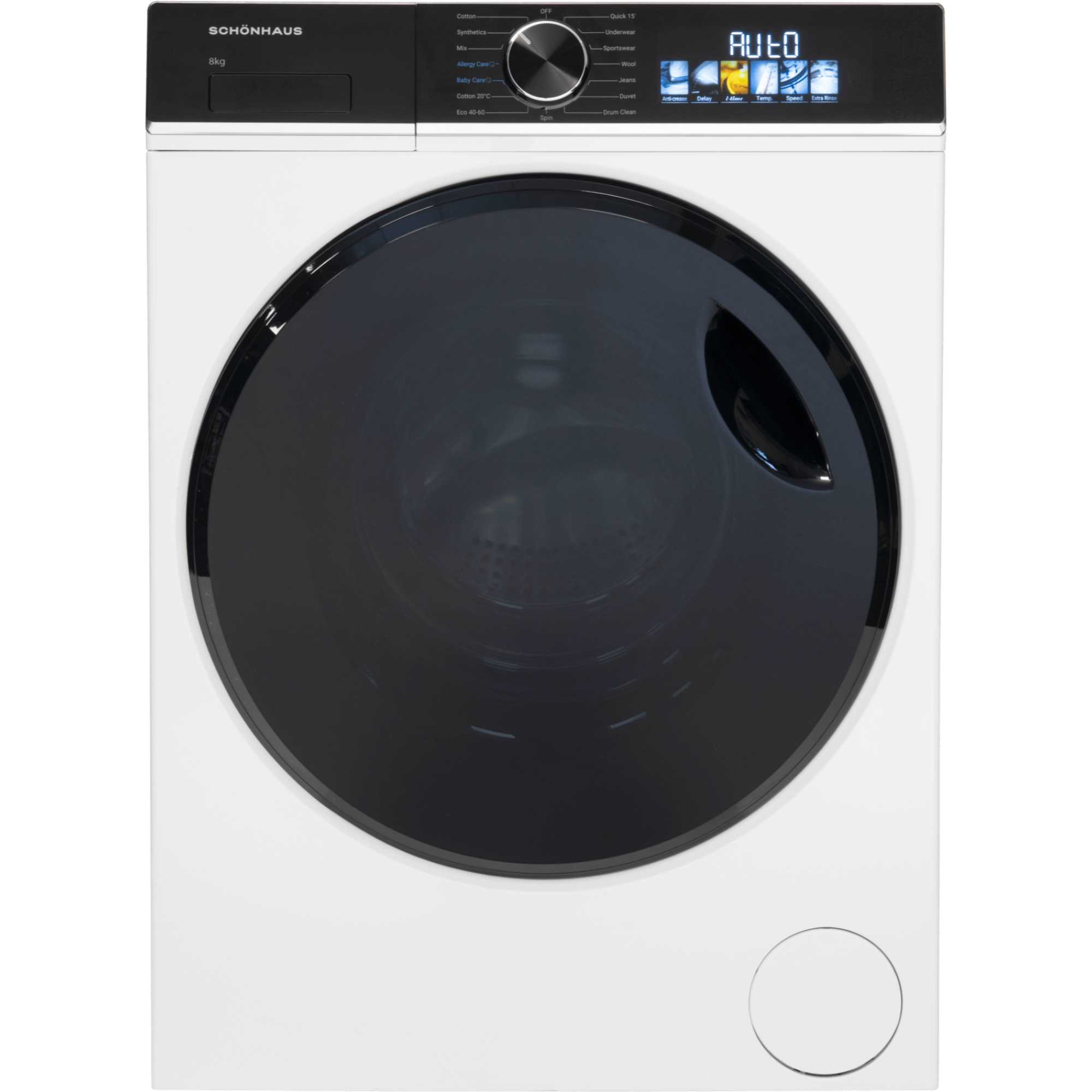
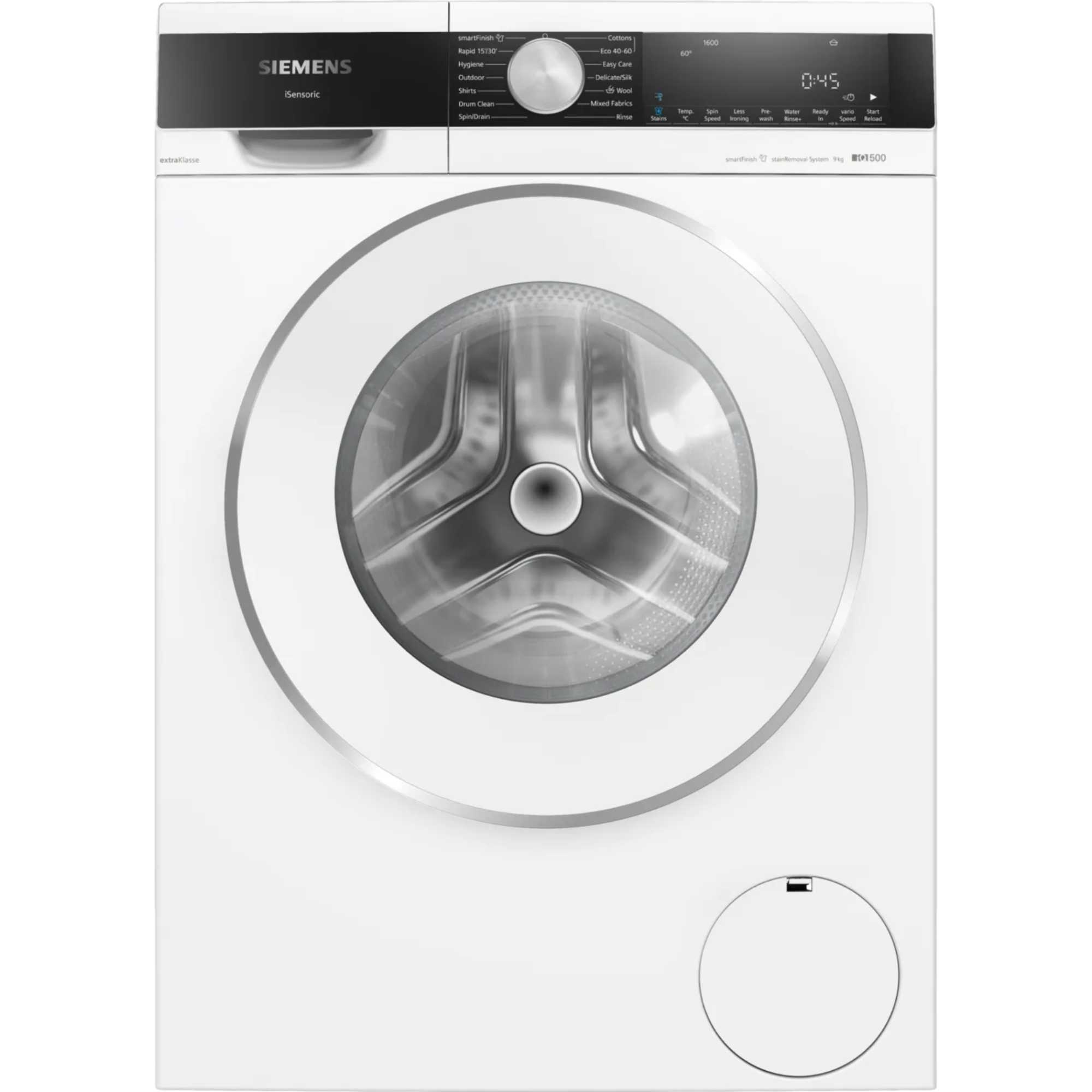
Schonhaus is the lower-cost option here, with the 8kg WMSF01814AW at £429.99, the 9kg WMSF01914AG at £449.99 and the 10kg WDSF0110614AW washer-dryer at £529.99. Siemens sits in premium territory, starting with the iQ500 WG46G2Z2GB 9kg at £679, moving to £899 for the smart WG46H2A9GB and WG46H2AXGB, and reaching £1,099 for the 10kg WG56B2A3GB. The 9kg WMSF01914AG is the Schonhaus model that comes in graphite.
The main technical difference is spin. Every Schonhaus machine spins at 1400rpm, while Siemens runs at 1600rpm, which removes more water before the drying stage. The iQ500 range adds iQDrive, speedPack, a stainRemoval system and i-Dos dosing that scans the detergent. The smart Siemens models also connect to the Home Connect app for remote starts and notifications. Schonhaus's range has few app features, so this is where the premium is most visible. The iQ500 models also carry i-Dos, which measures detergent on every load and reduces waste, a feature the Schonhaus range does not offer.
Schonhaus suits budget-conscious households, first-time buyers and rental properties that need a dependable everyday washer without paying a premium. Its washer-dryer suits flats where there is no room for a separate dryer. Siemens suits busy households that run frequent loads, because the faster spin can shorten drying time and reduce the reliance on a tumble dryer. For people who will use app control and automatic dosing most weeks, the iQ500 engineering justifies the higher price. A family doing daily loads may find the Siemens premium pays back through shorter drying times, while occasional users are better served by the Schonhaus.
Bottom line: choose Schonhaus if you want a capable 8kg or 9kg washer from £429.99 with 1400rpm spin, choose Siemens if you want 1600rpm spin, i-Dos dosing and Home Connect control from £679.